

What Is Included in Move Out Cleaning: 2026 Guide
Table of Contents
- What Is Included in Move Out Cleaning: A Room-by-Room Breakdown
- Move Out Cleaning Checklist: What to Cover Before the Walkthrough
- How Long Does Move Out Cleaning Take?
- Security Deposit Cleaning Requirements and Landlord Inspection Standards
- Move Out Cleaning vs. Standard Cleaning: What Changes
- Eco-Friendly Move Out Cleaning: Non-Toxic Products That Still Sanitize
- Post-Cleaning Inspection Checklist for Tenants
- Frequently Asked Questions
Last Updated: September 13, 2026
What Is Included in Move Out Cleaning: A Room-by-Room Breakdown
Move out cleaning is a top-to-bottom deep clean of a rental unit that goes beyond routine upkeep, covering appliance interiors, cabinet interiors, grout, baseboards, and every surface a landlord will inspect. At Fresh Element Cleaning Co., we handle these turnovers regularly, and the difference between a standard clean and a true move out cleaning is the difference between getting your deposit back and losing part of it.
The scope is defined by what a landlord inspection looks for: the inside of the oven, not just the stovetop; the inside of the cabinets, not just the doors; and window tracks, vents, and light fixtures that routine cleaning skips.
Below, we break down what is included in move out cleaning room by room.
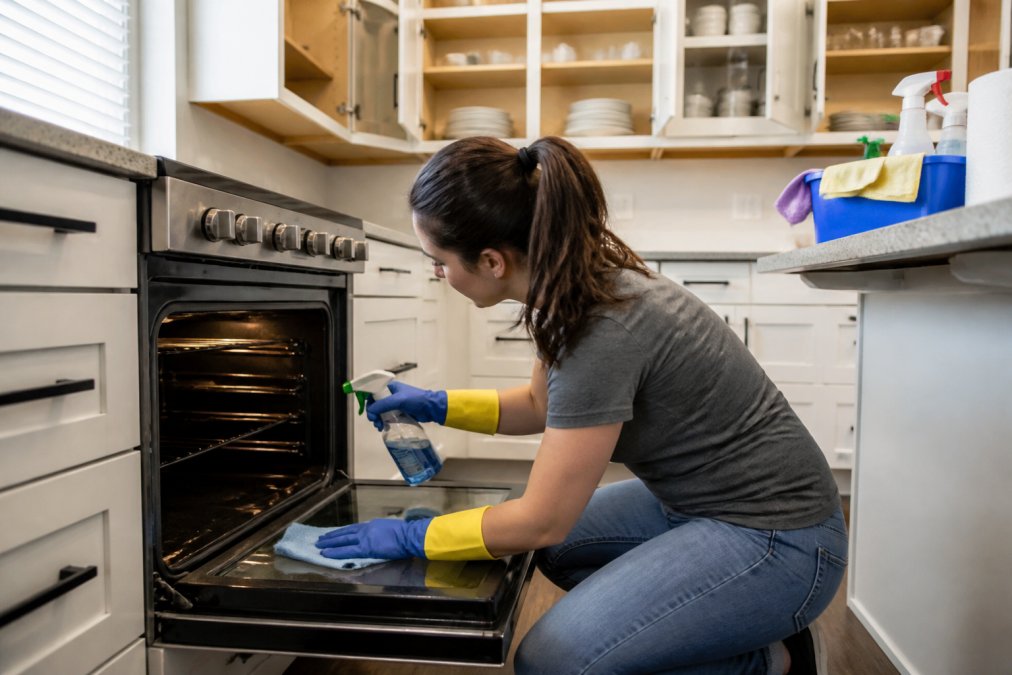
Kitchen: Appliance Interiors, Cabinet Interiors, and De-Greasing
The kitchen takes the longest of any room in a move out clean, and appliance interiors drive most of that time. The oven, refrigerator, microwave, and dishwasher get cleaned inside and out, including racks, drawers, door seals, and the drip tray under the fridge.
De-greasing is the second major task: range hoods, backsplashes, and the space between the stove and counter accumulate grease ordinary wiping won’t touch. Cabinet interiors get emptied and wiped, countertops scrubbed and sanitized, and the sink and fixtures descaled and polished.
A common mistake is skipping the refrigerator coils and the freezer drawer. Landlords notice both.
Bathrooms: Grout, Scale Removal, and Sanitizing Fixtures
Bathrooms are where scale removal and sanitizing matter most. Hard water leaves mineral deposits on faucets, showerheads, and glass doors, and grout lines trap soap scum a quick scrub won’t lift.
A proper move out clean includes scrubbing grout, descaling fixtures, sanitizing the toilet inside and out, cleaning the tub and shower surround, wiping vanities and mirrors, and washing the floor. Exhaust vents get dusted, and mildew on caulk lines is treated.
Living Areas and Bedrooms: Dusting, Vacuuming, and Surface Wiping
Living areas and bedrooms follow a dusting, vacuuming, and surface wiping sequence that starts high and works down. Ceiling fans, light fixtures, and vents come first so dust doesn’t settle on surfaces you’ve already cleaned.
Blinds get wiped slat by slat; baseboards, door frames, and window sills are dusted and wiped; closets are emptied and wiped inside. Carpets are vacuumed, hard floors mopped, and window tracks, one of the most overlooked spots in any move out, are vacuumed and scrubbed.
Move Out Cleaning Checklist: What to Cover Before the Walkthrough
A move out cleaning checklist keeps you from missing the spots that cost tenants the most money. Work through each room in order and document your work with photos.
- Oven interior, racks, and door glass de-greased
- Refrigerator interior, drawers, and coils cleaned
- Cabinet interiors wiped, inside and out
- Countertops scrubbed and sanitized
- Grout scrubbed and fixtures descaled
- Toilets, tubs, and showers sanitized
- Ceiling fans, light fixtures, and vents dusted
- Blinds, baseboards, and door frames wiped
- Window tracks vacuumed and scrubbed
- Floors vacuumed and mopped
High-Touch and Overlooked Spots: Light Fixtures, Vents, and Window Tracks
Light fixtures, vents, and window tracks are the three spots landlords check that tenants most often miss, and each collects dust and debris routine cleaning never addresses.
Light fixture covers should be removed, washed, and dried before reattaching. Vents and registers need vacuuming on the surface and the visible duct opening. Window tracks require a vacuum first, then a scrub with a small brush to lift packed dirt from the corners.
Photograph each of these spots before and after cleaning. If a landlord later disputes the condition of the unit, dated photos of the light fixtures, vents, and window tracks are your strongest evidence.
How Long Does Move Out Cleaning Take?
Move out cleaning typically takes four to eight hours for a one- to two-bedroom unit, and longer for larger homes or heavy buildup (angi.com). The range depends on square footage, the number of appliances, and how long it’s been since the last deep clean.
A studio or one-bedroom with light wear lands at the low end; a three-bedroom home with pets, carpet stains, or a neglected oven pushes toward the top of the range and beyond. Professional teams often split the work across two or three people, which shortens the clock but not the scope.
If you’re managing a turnover on a tight timeline, book the clean as soon as you know the move-out date. Short-notice availability fills up fast at the end of a lease month.
Security Deposit Cleaning Requirements and Landlord Inspection Standards
Security deposit cleaning requirements are set by your lease and state law, and they define what a landlord can legitimately deduct for. Most leases require the unit returned in the same condition as move-in, minus normal wear and tear, the distinction where most disputes are won or lost.
Normal wear and tear is deterioration from ordinary, intended use over time: faded or slightly scuffed paint, minor carpet wear along a walking path, small nail holes, worn hardwood finish, a tub that has gradually lost its shine. Dirt, stains, pet damage, burns, broken fixtures, and buildup a reasonable cleaning would have removed are generally deductible.
The legal backbone is the itemized deduction requirement. Most states require a landlord to send a written, itemized list of every deduction with the remaining deposit, and many require receipts or estimates. Most states also set a return deadline, commonly 14 to 30 days after you vacate, though the window varies and can be longer if the lease specifies it (ncsl.org). If a landlord misses that deadline or fails to itemize, many states strip the right to keep any of the deposit, and some allow the tenant to recover additional damages.
Because these rules vary so much from state to state, the practical move is to check two sources before you clean: your signed lease, which may impose a stricter standard than state law, and your state’s landlord-tenant statute. The U.S. Department of Housing and Urban Development tenant resources publishes general guidance, and your state attorney general’s office or a local tenant-rights organization can point you to the specific statute and return timeline that applies to you.
Common Deductions and How to Avoid Them
The most common deductions trace back to a short list of missed spots, each avoidable with the right checklist.
| Common Deduction | Why It Happens | How to Avoid It |
|---|---|---|
| Oven and stove residue | Grease baked onto interior surfaces | De-grease oven interior and racks |
| Bathroom grout and scale | Soap scum and hard water left behind | Scrub grout, descale fixtures |
| Carpet stains | Spills set in before cleaning | Vacuum and spot-treat before walkthrough |
| Dusty vents and fixtures | Overlooked in routine cleaning | Dust vents, fans, and light covers |
| Dirty window tracks | Debris packed into corners | Vacuum, then scrub tracks |
| Cabinet interiors | Crumbs and spills left inside | Empty and wipe all cabinets |
Skipping the oven interior is the single most common reason tenants lose part of a deposit. Landlords check it first, and baked-on grease reads as neglect rather than normal wear.
Using Your Cleaning Checklist as Evidence in a Deposit Dispute
Most guides tell you to clean thoroughly and hope for the best. A stronger approach treats your cleaning checklist as a documented record you can produce if a deduction is disputed, the record that separates a refund from a fight.
Here is how to build that record as you clean:
- Photograph before you start. Capture the unit’s condition on move-in day if possible, and again the day you begin your move-out clean. Date-stamped photos establish the baseline.
- Photograph after each task. A photo of the clean oven interior, the scrubbed grout, and the wiped window tracks is proof the work was done to a reasonable standard.
- Keep receipts. If you hired a professional cleaner, the invoice and any before/after photos the company provides are strong evidence of a reasonable cleaning effort.
- Save your completed checklist. A signed, dated checklist that mirrors the lease’s cleaning expectations shows you met the standard the landlord set.
- Request the itemized deduction list in writing. If a landlord withholds part of the deposit, ask for the itemization and the receipts. Compare each line against your photos.
If a deduction still looks unjustified, the usual escalation path is a written demand letter citing your state’s deposit statute and return deadline, then a complaint to the state agency overseeing landlord-tenant matters or small claims court. Many states allow a tenant to recover the wrongfully withheld amount plus a penalty, and some allow attorney’s fees. The photos and checklist you built during the clean make that path viable.
Your cleaning checklist is not just a to-do list, it is a dated, photographic record. Treat every checkbox as a potential exhibit in a deposit dispute, and you shift the burden of proof back onto the landlord.
Move Out Cleaning vs. Standard Cleaning: What Changes
Move out cleaning covers everything a standard clean does, plus the interiors, edges, and buildup standard cleaning leaves alone. A standard clean maintains a lived-in home; a move out clean resets it for the next occupant.
Standard cleaning handles surface wiping, vacuuming, mopping, and bathroom fixtures. Move out cleaning adds appliance interiors, cabinet interiors, grout scrubbing, scale removal, baseboards, vents, light fixtures, and window tracks. It also assumes the unit is empty, so every surface is accessible.
That accessibility is why timing matters. Cleaning around furniture leaves the same dust and debris behind, and a landlord inspection will find it.
Eco-Friendly Move Out Cleaning: Non-Toxic Products That Still Sanitize
Eco-friendly move out cleaning uses products and methods that reduce chemical exposure and environmental impact while still meeting the sanitizing standard a landlord inspection expects. The key word is standard, ‘green’ is a set of measurable criteria, and knowing them lets you tell a genuinely low-toxicity clean from a bottle with a leaf on it.
What ‘Green’ Actually Means
A credible green cleaning approach usually satisfies several of these criteria at once:
- Third-party certification. Look for products carrying recognized certifications such as EPA Safer Choice, Green Seal, or UL ECOLOGO. These programs verify ingredient safety and environmental impact against published standards rather than self-reported claims.
- Low-VOC formulations. Volatile organic compounds are the chemicals that off-gas and cause the ‘new cleaner’ smell. Low-VOC and plant-derived surfactants reduce indoor air pollution during and after a turnover.
- Biodegradable ingredients. Products that break down after use reduce the load on wastewater treatment and waterways.
- Concentrates and refillables. Dilutable concentrates cut packaging waste and shipping weight, which lowers the carbon footprint of the clean itself.
- EPA-registered disinfecting claims where sanitizing is required. This is the crucial nuance: a product can be green and still carry an EPA registration number for disinfecting. When a landlord expects a sanitized bathroom or kitchen, the disinfectant should carry that registration, ‘natural’ alone does not sanitize to a verifiable standard.
How Green Move Out Cleaning Differs From Conventional Cleaning
The scope of a move out clean does not change when you go green, the same appliance interiors, grout, baseboards, and window tracks get cleaned. What changes is the chemistry and method:
- Method over muscle. Green cleaning leans on dwell time, agitation, and the right tool (a stiff grout brush, a microfiber cloth, a steam cleaner) rather than harsh solvents. Letting a plant-based degreaser sit on baked-on oven residue for several minutes often does the work a caustic spray would do instantly.
- Steam as a sanitizer. Steam cleaners use heat rather than chemicals to sanitize hard surfaces, which is a common green substitute for bleach-based products on tile, grout, and fixtures.
- Microfiber over disposables. Reusable microfiber cloths and mop pads capture dust and grime with less water and no paper waste.
- Ventilation and sequencing. Green cleans typically start with the least-toxic products and work up to stronger ones only where needed, and they rely on fresh air rather than fragrance to mask odors.
The Trade-Offs to Know
Green cleaning is not automatically better on every axis. Some plant-based degreasers need more dwell time than conventional solvents, so a green move out clean can take longer. Some green disinfectants have narrower kill claims, meaning the surface must stay wet for the full contact time on the label to actually sanitize. And ‘fragrance-free’ does not mean ‘unscented’, some products use masking agents.
The practical rule: match the product to the task. Use a certified low-VOC all-purpose cleaner for routine surfaces, a plant-based degreaser with adequate dwell time for the kitchen, and an EPA-registered disinfectant, green or not, anywhere the lease or a landlord expects verified sanitizing.
Fresh Element Cleaning Co. uses eco-friendly products across every service, including move-in and move-out cleans, so a turnover does not trade one problem for another. When you hire any green cleaning service, ask which certifications their products carry and whether their disinfectants are EPA-registered, those two questions separate a real green standard from a green label.
Post-Cleaning Inspection Checklist for Tenants
A post-cleaning inspection checklist is your final pass before the walkthrough and the step that protects your deposit. Walk the unit room by room with your checklist and phone camera.
- Open every appliance and confirm interiors are spotless
- Check grout lines and fixtures for remaining scale
- Run a hand along baseboards and window sills for dust
- Confirm vents and light fixtures are dust-free
- Inspect window tracks for packed debris
- Photograph every room, appliance, and fixture
- Compare the unit against your move-in condition report
If you find a missed spot, fix it before the landlord inspection rather than after. A second pass takes minutes; a disputed deduction can take weeks to resolve.
Move out cleaning is one of the few tasks where the details decide the outcome, and a missed oven interior or dusty vent can cost you part of your deposit. Fresh Element Cleaning Co. handles full move-in and move-out turnovers with eco-friendly products, a detailed room-by-room checklist, and a 100% satisfaction guarantee, so nothing gets left to chance. Our mobile-friendly booking system lets you schedule a turnover in minutes, and our team works from a documented standard covering every spot a landlord inspection will check. Get started with Fresh Element Cleaning Co. and hand back a unit that’s genuinely move-in ready.
Frequently Asked Questions
What should a move-out clean consist of?
A move-out clean covers everything in a standard clean plus appliance interiors, cabinet interiors, baseboards, light fixtures, ceiling fans, vents, blinds, window tracks, and grout scrubbing. The goal is returning the unit to move-in ready condition so the landlord inspection finds no cause for deductions. It goes beyond surface wiping to include de-greasing, scale removal, and stain removal in every room.
Is a move-out clean more than a regular clean?
Yes. A regular clean maintains a lived-in space: vacuuming, mopping, dusting, and surface wiping. A move-out clean adds deep cleaning tasks like inside the oven and refrigerator, inside cabinets and drawers, scrubbing grout, removing hard water scale, cleaning vents, and wiping down doors and baseboards. The extra detail is what protects your security deposit during the walkthrough.
How long does a professional move-out cleaning take?
Timing depends on square footage, condition, and whether the home is empty. A studio or one-bedroom apartment typically takes 2 to 4 hours, a two- to three-bedroom home runs 4 to 6 hours, and larger homes with heavy buildup can take 6 to 10 hours. Booking a team rather than one cleaner shortens the window. Empty units go faster because cleaners can work without moving around furniture.
Do I need to clean the inside of appliances for a move-out?
Most lease agreements and landlord inspection checklists require appliance interiors to be clean. That means the oven interior, stovetop drip pans, refrigerator shelves and drawers, microwave interior, and dishwasher filter. De-greasing the oven and removing food residue from the refrigerator are the two tasks landlords check first. Skipping them is one of the most common causes of security deposit deductions.
What are common move-out cleaning mistakes?
The most frequent mistakes are skipping appliance interiors, ignoring baseboards and light fixtures, leaving window tracks dirty, forgetting ceiling fan blades and vents, and not cleaning inside cabinets. Another common error is cleaning before all belongings are moved out, which means re-cleaning after the final load. Documenting your work with photos before the walkthrough also helps if a landlord disputes the property condition.
Are move-out cleaning services worth it?
For most renters, yes. Professional service covers the deep cleaning tasks that landlords inspect most closely, and a documented clean reduces the risk of deductions from your security deposit. If your deposit is larger than the cost of a professional clean, hiring a service is a practical way to protect it. It also saves the time and physical effort of a full deep clean during an already busy move.