Best Cleaning Services for Allergies: 2026 Guide
Table of Contents
- What Makes a Cleaning Service Allergy-Safe
- Fragrance-Free Cleaning Service Options
- Cleaning Services for Dust Allergies
- Pet Dander Cleaning Service: Specialized Approaches
- HEPA Vacuum Cleaning Service and Deep Allergen Removal
- How to Choose the Right Allergy-Focused Cleaning Service
- Frequently Asked Questions
Last Updated: October 5, 2026
What Makes a Cleaning Service Allergy-Safe
The difference is methodology.
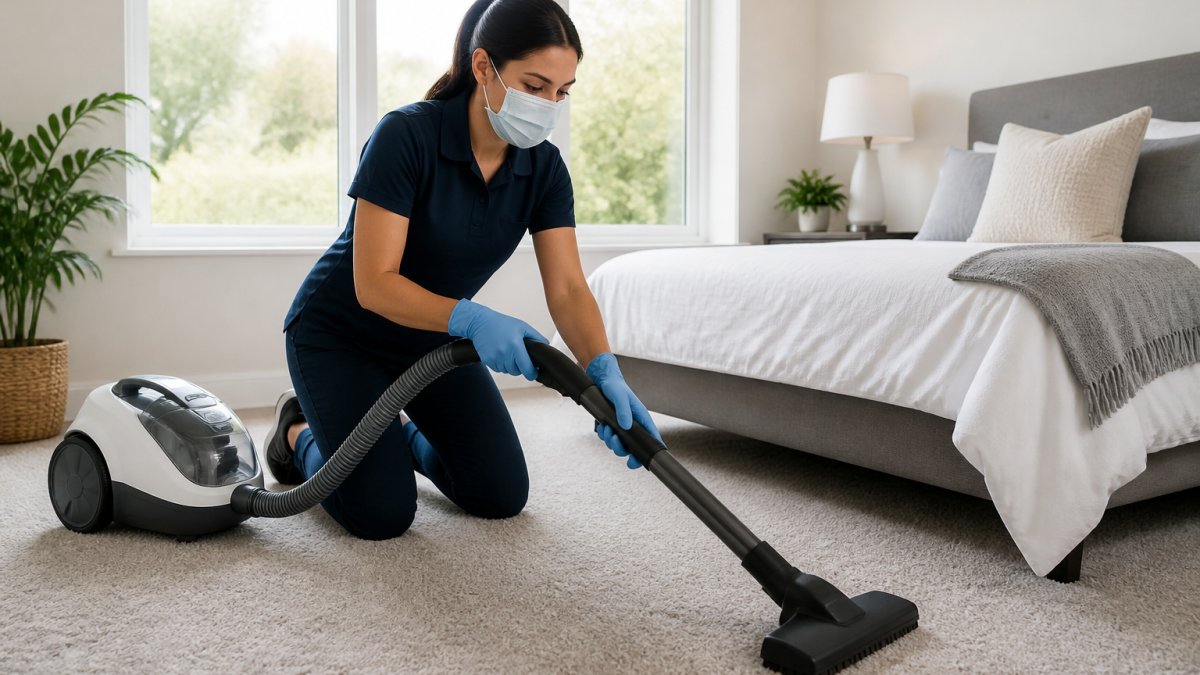
When evaluating cleaning services for allergies, look for hypoallergenic, fragrance-free solutions; HEPA-filter vacuuming equipment; attention to soft surfaces like carpets and upholstery; and willingness to customize around your sensitivities.
Many people with allergies settle for inadequate cleaning because they assume all services are the same.
Fragrance-Free Cleaning Service Options
Fragrance sensitivity affects more people than most realize. Even “unscented” products often contain masking fragrances that trigger headaches, respiratory irritation, or asthma symptoms. True fragrance-free products eliminate these hidden irritants.
Why “unscented” and “fragrance-free” are not the same thing
Under U.S. labeling conventions, “unscented” means no scent was added for smell, but a masking fragrance may still be present to neutralize the base odor. “Fragrance-free” means no fragrance was added at all.
Fragrance is also a broad category. A single “fragrance” on a label can represent dozens of compounds, and some, such as limonene and linalool, are known skin sensitizers that can cause contact dermatitis.
What to ask before you book
When selecting a fragrance-free cleaning service, verify that their entire product line, not just the main cleaner, is fragrance-free, including floor treatments, disinfectants, glass cleaners, and deodorizers. Many claim fragrance-free options but still use scented products on certain surfaces or in restrooms.
Use these questions to separate real fragrance-free policies from marketing:
- Which specific products do you use, and can I see the ingredient list or safety data sheet? SDS documents won’t list every fragrance compound, but a provider who can produce them is tracking what they use.
- Are products used as supplied or diluted on-site? Pre-diluted, single-use products are easier to verify than concentrates mixed at inconsistent ratios.
- Do you use any air fresheners, plug-ins, or scented laundry additives? These are common hidden sources of fragrance in a “fragrance-free” clean.
Request a full product list before booking. Ask your service provider to bring products to your home 24 hours before the first cleaning so you can verify they don’t trigger symptoms. This simple step prevents expensive service cancellations and gives you confidence in their commitment to your needs.
A pre-visit and post-cleaning checklist
Preparation makes a measurable difference:
Before the visit
- Send a written list of your triggers and the products you react to.
- Confirm no air fresheners, plug-ins, or scented laundry additives will be used.
- If your sensitivity is severe, be away during service or ventilate rooms as they’re finished.
After the visit
- Ventilate: open windows and run exhaust fans or a HEPA air purifier in cleaned rooms.
- Check for residue on surfaces you contact directly, counters, tables, bathroom fixtures, and wipe with a damp cloth if needed.
- Note symptoms and timing to identify the responsible product or surface.
Match the approach to your sensitivity
Fragrance sensitivity is not the same as a contact allergy or allergic asthma:
- Fragrance sensitivity or chemical sensitivity: prioritize a fully fragrance-free product line and no added scents. Ventilation during and after service is essential.
- Contact allergy (skin): focus on which products touch surfaces you contact directly, and ask whether a residue-free rinse is part of the process.
- Allergic asthma: avoid aerosol sprays and scented disinfectants; ask for damp wiping and HEPA vacuuming instead of dry dusting.
Fresh Element Cleaning Co. works with clients to understand their fragrance and chemical sensitivities, customizing product selection to match your household’s needs, one family’s “hypoallergenic” solution may trigger another’s symptoms.
Cleaning Services for Dust Allergies
Dust allergies stem primarily from dust mites and their droppings, which accumulate in bedding, carpets, upholstery, and air handling systems.
Dust-focused services typically include hot-water extraction, which removes embedded dust more effectively than dry vacuuming.
For effective dust allergen reduction, cleaning services should address:
- Carpets and rugs via hot-water extraction or deep steam cleaning
- Upholstered furniture using methods that penetrate fabric fibers
- Bedding through regular hot-water washing (ideally 130°F or higher)
Timing matters. Dust mites thrive in humid environments and reproduce rapidly, so cleaning every one to two weeks controls allergens better than monthly or quarterly service.
Avoid services that use dry dusting methods or air-dispersing techniques. Dry dusting simply moves dust particles into the air where you’ll inhale them. Damp wiping and HEPA-filtered vacuuming capture and contain dust rather than redistributing it.
Pet Dander Cleaning Service: Specialized Approaches
Pet dander, tiny skin flakes shed by cats, dogs, and other animals, is one of the most persistent household allergens. It clings to furniture, bedding, and air vents and remains allergenic for months even after a pet leaves a home.
A pet dander cleaning service requires more aggressive allergen removal than standard cleaning:
- HEPA-filter vacuuming of all carpeted surfaces and upholstered furniture
- Hot-water extraction of carpets to remove embedded dander
- Upholstery cleaning or replacement of heavily affected pieces
Pet dander persists even with aggressive cleaning. Families managing pet allergies often find professional deep cleaning every 7-10 days, combined with HEPA air filtration in bedrooms, provides the best symptom control.
Households with one or more pets and family members with documented pet allergies. Services should include weekly HEPA vacuuming, monthly hot-water carpet extraction, and monthly upholstery cleaning.
HEPA Vacuum Cleaning Service and Deep Allergen Removal
HEPA (High-Efficiency Particulate Air) filtration is the gold standard for allergen removal. A HEPA filter captures 99.97% of particles 0.3 microns or larger, small enough to catch dust mites, pollen, mold spores, and pet dander (the EPA).
Not all vacuums labeled “HEPA” deliver HEPA performance. True HEPA vacuums must have:
- A sealed system where air passes through the HEPA filter, not around it
- A filter rated to actual HEPA standards (not “HEPA-type” or “HEPA-like”)
- Regular filter replacement (typically every 3-6 months with heavy use)
When evaluating a service’s HEPA vacuuming capability, ask whether they use commercial-grade HEPA equipment and how often they replace filters. Budget services often use lower-cost equipment that doesn’t meet true HEPA specifications.
Deep cleaning requires extraction and treatment that penetrate where allergens hide, not just vacuuming.
Deep allergen removal goes beyond vacuuming. It includes:
- Hot-water extraction of carpets (removes 80-90% of dust mites and dander)
- Steam cleaning of upholstery and mattresses
- Air duct cleaning to remove accumulated allergen particles
Families with severe allergies need cleaning that measurably reduces the irritants triggering their symptoms.
| Service Feature | Standard Cleaning | Allergy-Focused Cleaning |
|---|---|---|
| Vacuum type | Standard or bagless | HEPA-filter only |
| Carpet cleaning | Dry or light steam | Hot-water extraction |
| Upholstery approach | Surface dusting | Deep steam cleaning |
| Product type | Scented or standard | Fragrance-free, hypoallergenic |
| Air duct attention | Not included | Included in deep service |
| Frequency | Monthly or quarterly | Weekly or bi-weekly |
How to Choose the Right Allergy-Focused Cleaning Service
Selecting cleaning services for allergies requires more evaluation than choosing a general cleaner. You’re buying allergen reduction, not just cleanliness, so verify claims rather than accepting marketing language at face value.
Compare providers on the four things that actually matter
Transparent comparisons are rare, so build your own using these four columns:
| What to compare | What “good” looks like | What to watch for |
|---|---|---|
| Fragrance-free policy | Entire product line is fragrance-free, including floor treatments, disinfectants, and deodorizers | “Unscented” products that contain masking fragrance; scented products used only in restrooms |
| Product disclosure | Willing to share ingredient lists or safety data sheets (SDS) before the first visit | Vague answers like “green” or “non-toxic” with no documentation |
| HEPA equipment | Sealed-system vacuums with true HEPA filters, replaced on a set schedule | “HEPA-type” or “HEPA-like” filters; bagless units emptied indoors |
| Allergen-focused services | Hot-water extraction for carpets, upholstery and mattress treatment, optional duct cleaning | Surface vacuuming marketed as “deep cleaning” |
Ask each provider to fill in those four rows in writing. A service that can’t or won’t is telling you something.
How to verify allergy-safe claims
Marketing terms like “hypoallergenic” and “allergy-safe” are not regulated for cleaning services, so verification is on you:
- Request the product list before booking. Ask for brand names and, where available, safety data sheets. SDS documents won’t tell you everything about fragrance, but they reveal whether a provider knows what’s in the bottle.
- Ask whether products are used as supplied or diluted. Concentrates diluted on-site can be mixed at inconsistent ratios and may still contain fragrance. Pre-diluted, single-use products are easier to verify.
- Ask about cross-contamination. Do they use the same cloths and mop heads in a pet household as in a fragrance-sensitive one? Color-coded cloths and fresh mop heads per room are a reasonable baseline.
- Ask about equipment servicing. HEPA filters need replacement, commonly every 3 to 6 months with heavy use, and vacuum bags need sealed disposal. A provider who can’t describe their schedule likely isn’t tracking it.
- Request references from allergy-sensitive households. Specific, recent references beat generic testimonials.
Match the service to your specific sensitivity
“Allergies” is not one condition, and the accommodation that helps one household can be irrelevant to another. Translate your triggers into service requests:
- Fragrance sensitivity or chemical sensitivity: prioritize a fragrance-free product line, request the ingredient list, and ask that no air fresheners, plug-ins, or scented laundry additives be used. Ventilate during and after service.
- Allergic asthma: emphasize HEPA vacuuming, damp wiping instead of dry dusting, and avoidance of aerosol sprays. Ask that cleaning be sequenced so dust is captured, not dispersed.
- Dust mite allergy: focus on bedding washed in hot water (ideally 130°F or higher), mattress and pillow encasements, and hot-water extraction of carpets. Humidity control matters as much as cleaning.
Set realistic expectations
Professional cleaning can meaningfully reduce allergen load on surfaces and soft furnishings. It cannot eliminate allergens from a home, and it is not a medical treatment. A few honest limits:
- Dust mites cannot be removed from a humid home by cleaning alone. They thrive at indoor humidity above roughly 50%, so cleaning works best alongside humidity control.
- Air duct cleaning is not a cure-all. It may remove accumulated debris, but if the underlying issue is moisture, pests, or a poorly sealed system, duct cleaning won’t fix it. Some indoor air quality organizations advise duct cleaning primarily when there’s visible debris, mold, or vermin, not as routine maintenance.
- Symptom relief is not guaranteed. Results depend on your triggers, your home, and consistency. Judge a provider on whether allergen load on surfaces is measurably reduced, not on whether symptoms disappear.
Understand what drives the price
Allergy-focused cleaning typically costs more than standard cleaning, and the premium should be traceable to specific inputs. Common cost drivers:
- Time per visit. Slower, more thorough methods, damp wiping, HEPA vacuuming of every soft surface, hot-water extraction, take longer than surface cleaning.
- Equipment. Commercial HEPA vacuums, extractors, and filter replacement schedules carry real costs.
- Products. Fragrance-free, single-use or pre-diluted products often cost more per visit than bulk scented concentrates.
Ask for an itemized scope so you can see what’s included versus added on. A provider who can explain the cost drivers is more likely to deliver the service you’re paying for.
The best allergy-focused cleaning service listens to your specific triggers, customizes their approach accordingly, and uses equipment and products proven to reduce allergens, not just mask them with fragrance. Verify claims with documentation, match the service to your sensitivity, and expect reduction, not elimination.
Request a pre-service consultation to discuss your allergies in detail. A service that asks clarifying questions is more likely to deliver results than a one-size-fits-all approach. Check whether the service offers a satisfaction guarantee, and consider the booking and communication systems, responsive support makes it easier to adjust your plan as needs evolve.
Frequently Asked Questions
What should I look for in a cleaning service if I have allergies?
Prioritize services that use fragrance-free, non-toxic cleaning products and offer HEPA vacuuming. Ask about their approach to dust mites, pet dander, and pollen removal. Verify they can customize their methods for your specific allergies, whether that’s avoiding certain product categories, using hypoallergenic solutions, or focusing on carpet and upholstery cleaning. Request references.
Can professional house cleaning help reduce dust and pet dander?
Yes. Professional cleaning services equipped with HEPA vacuums and steam-cleaning technology can significantly reduce dust mites and pet dander from carpets, mattresses, and upholstery. Deep cleaning removes allergen buildup that regular vacuuming misses. Recurring professional cleaning maintains lower allergen levels over time, which is especially effective when combined with your own cleaning efforts between visits.
How often should a home be cleaned to help manage allergens?
Weekly or bi-weekly professional cleaning is most effective for allergy management, depending on your sensitivity level and household factors like pet ownership and carpet coverage. Between professional visits, daily vacuuming with a HEPA filter and weekly dusting help control allergen accumulation. During high pollen seasons, more frequent cleaning may be necessary. Discuss your specific needs with your cleaning service to establish an optimal schedule.
Are fragrance-free cleaning products better for people with allergies?
Yes. Fragrance-free products eliminate a common allergen and irritant source. Synthetic fragrances and essential oils can trigger respiratory symptoms, headaches, and skin reactions in sensitive individuals. Fragrance-free, non-toxic cleaning solutions reduce indoor air quality issues while still effectively sanitizing surfaces. Look for services that use products without added scents and disclose their ingredient lists.