Pet-Safe Cleaning Products Guide: How to Clean Safely
Table of Contents
- Why Pet-Safe Cleaning Products Matter
- Toxic Cleaning Ingredients to Avoid for Pets
- How to Read Cleaning Product Labels for Pet Safety
- DIY Pet-Safe Cleaning Recipes
- How to Clean Carpets with Pets
- Safe Storage and Ventilation During Cleaning
- Essential Pet-Safe Cleaning Supplies to Stock
- Common Mistakes to Avoid When Cleaning Around Pets
- Frequently Asked Questions
Last Updated: September 27, 2026
Why Pet-Safe Cleaning Products Matter
When you have pets, keeping your home clean AND safe requires balance. Many pet owners don’t realize that common household cleaners contain chemicals that can harm dogs, cats, and other animals through immediate or repeated exposure.
Volatile organic compounds, synthetic fragrances, and harsh chemical residues linger on surfaces after cleaning. Your dog walks across a floor and absorbs residue through their paws; a cat rubs against a wiped cabinet. These chronic exposures accumulate silently over time.
Families who switch to pet-safe cleaning products often notice their pets have fewer respiratory issues, less skin irritation, and more energy. The connection between cleaning chemistry and pet health is direct.
This guide covers which ingredients to avoid, how to read labels, DIY recipes that work, and proper carpet cleaning. These strategies keep your space clean without compromising your pet’s health.
Toxic Cleaning Ingredients to Avoid for Pets
Conventional cleaners contain chemicals that cause either immediate poisoning or chronic buildup over time.
Chemical hazards: chlorine bleach, ammonia, and phenols
Chlorine bleach is corrosive to skin, mucous membranes, and the respiratory tract (Chlorine | Medical Management Guidelines | Toxic Substance Portal). A dog exposed to bleach shows symptoms within minutes: vomiting, drooling, difficulty breathing, or collapse. Even small residue amounts cause irritation through repeated contact.
Ammonia is equally dangerous and damages lungs and eyes. Never mix ammonia and bleach, the reaction creates lethal chloramine gas. It’s common in glass and window cleaners; always check labels before using around pets.
Phenols in disinfectants and pine-scented cleaners are particularly toxic to cats, which lack enzymes to break them down. Even “natural” pine oil cleaners can cause serious liver damage in felines.
Check ingredient lists before buying. Avoid products listing bleach, ammonia, or phenol, the most common dangerous chemicals in household cleaners.
Hidden dangers: phthalates, quaternary ammonium compounds, and synthetic fragrances
This is where pet-safe cleaning products get tricky. Some of the most harmful chemicals don’t appear on the front label at all.
Phthalates are plasticizers hidden under “fragrance” or “parfum” labels. They accumulate in your pet’s body and have been linked to reproductive and developmental issues, causing silent damage over time.
Quaternary ammonium compounds (quats) in disinfectants are respiratory irritants. Pets exposed develop coughing, wheezing, and chronic respiratory inflammation. Unexplained pet coughing may indicate quat exposure.
Synthetic fragrances are chemical mixtures designed to trigger olfactory receptors. For pets with sensitive respiratory systems, they’re irritants. Your pet’s acute sense of smell makes “fresh” scents overwhelming and irritating.
Buy cleaners explicitly labeled “fragrance-free” or “unscented.” Avoid products with vague ingredient lists that don’t break down what “fragrance” means.
Never assume a product is pet-safe just because it’s marketed as “green” or “natural.” Some natural ingredients like tea tree oil and eucalyptus are toxic to pets. Always check the complete ingredient list, not just the marketing language on the front.
How to Read Cleaning Product Labels for Pet Safety
Label reading is your first line of defense. Here’s what to look for and what to ignore.
Check the ingredient list. Legitimate pet-safe products list every ingredient or major active components. Vague terms like “surfactants,” “preservatives,” or “fragrance” hide chemicals you can’t evaluate.
Signal phrases (“Danger,” “Warning,” “Caution”) indicate toxicity levels, but they’re based on human exposure, not pet exposure. A product marked “Caution” for humans may still be dangerous for pets.
Look for the EPA’s Safer Choice label or third-party pet-safety certifications. These indicate products have passed baseline safety screening.
Read precautions carefully. “Keep away from children and pets” is a direct warning. “Ventilate well” means fumes are a concern for your pet too.
Check for contact information. If you can’t reach the company to ask pet-safety questions, the company doesn’t prioritize transparency.
Take a photo of product labels with your phone before you buy. When you get home, you can cross-reference the ingredients against a pet toxicity database if you’re unsure. Many veterinary clinics have lists of common household toxins, ask for one.
DIY Pet-Safe Cleaning Recipes
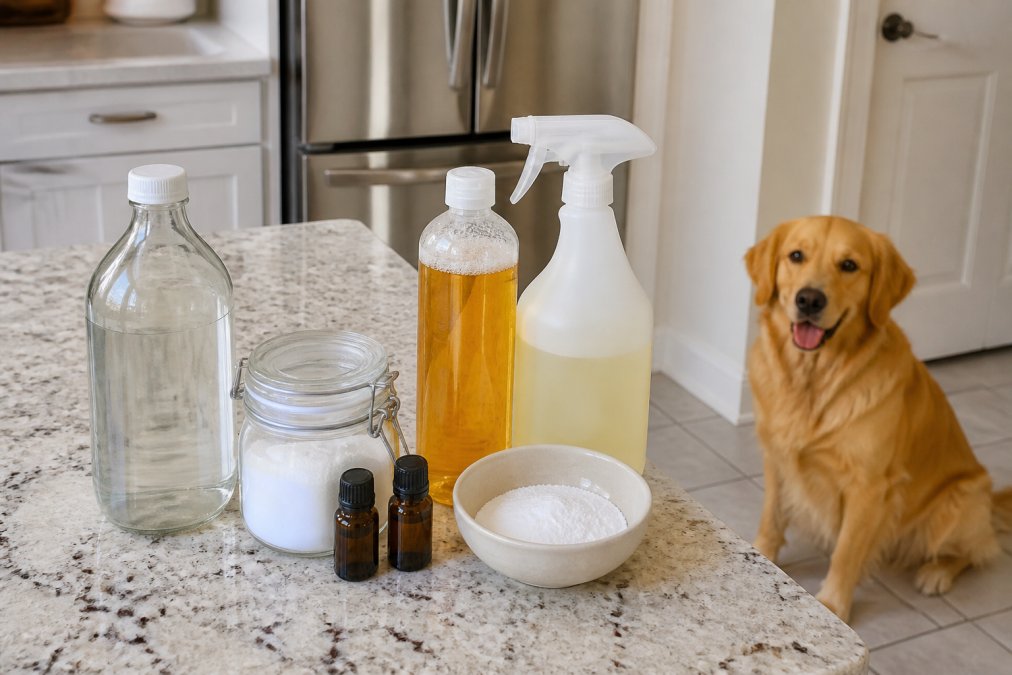
The simplest way to guarantee a cleaner is pet-safe is to make it yourself. You control every ingredient. These recipes use common household items that are genuinely safe for pets when used as directed.
All-purpose cleaner and deodorizer solutions
White vinegar cuts through grease, disinfects, and leaves no toxic residue. Mix one part vinegar with one part water in a spray bottle. For deodorizing, add 10-15 drops of diluted pet-safe essential oil like lavender or cedarwood.
For stronger cleaning, combine two cups of water, two tablespoons of white vinegar, and half a teaspoon of liquid castile soap. Shake before use. This cuts through stubborn grime without residue.
For stubborn odors, sprinkle baking soda on carpets or furniture, let sit 15-20 minutes, then vacuum. For liquid odors, apply a baking soda paste, let dry, then vacuum. Baking soda neutralizes odors chemically rather than masking them.
Enzymatic cleaners for pet stains and odors
This is where DIY gets more specialized. Enzymatic cleaners break down the organic compounds in urine and feces, which is why they’re so effective for pet accidents. You can buy commercial enzymatic cleaners that are pet-safe, or you can make a basic version at home.
Mix one cup of warm water with one tablespoon of baking soda and a few drops of liquid castile soap for fresh accidents. For dried stains, invest in a commercial pet-safe enzymatic cleaner.
Apply enzymatic cleaner generously to saturate carpet fibers and padding. Let sit 10-15 minutes for enzymes to work, then blot thoroughly. Rinse with plain water after enzymes break down organic matter.
The reason enzymatic cleaners work is biological, not chemical. They use naturally occurring proteins to break down organic compounds. This is why they’re safe for pets, they’re targeting the same proteins in urine that your pet’s own digestive system recognizes.
How to Clean Carpets with Pets
Carpet cleaning around pets requires a different approach than standard cleaning. The goal is to get carpets truly clean while managing the residue your pet will contact afterward.
Pre-cleaning steps and post-cleaning residue management
Vacuum thoroughly at least twice in different directions. Use a HEPA filter vacuum if available to trap allergens and pet dander.
Mark problem areas with tape. Apply your chosen cleaner (enzymatic for urine, vinegar-based for dirt) and let sit to allow penetration and breakdown.
Rinse with plain water and extract as much moisture as possible using a wet-dry vacuum or rental extraction machine. Excess water promotes mold and exposes pets to wet residue.
After cleaning and extracting, residue remains in carpet fibers. Vinegar-based residue is harmless, but commercial cleaner residue matters since pets absorb it through paws and skin.
Do a final plain-water rinse with the extraction machine to remove more chemical residue and leave carpet safer for your pet.
Drying time and reentry safety
Dry carpet completely before pets return, wet carpet harbors mold, creates slipping hazards, and causes skin irritation.
Open windows, run fans, and use a dehumidifier if available. Carpet takes 24-48 hours to dry completely. Don’t rush, pets walking on damp carpet absorb moisture and residual chemicals.
Keep pets out of the room for 24 hours after commercial carpet cleaning to allow chemical residue to off-gas. Pets’ respiratory systems are more sensitive and absorb fumes more intensely.
Hot water extraction improves cleaning but extends drying time. Use a dehumidifier to speed drying if available.
Safe Storage and Ventilation During Cleaning
Where you keep your cleaners and how you ventilate while using them directly affects your pet’s safety.
Store all cleaning products in a locked cabinet or high shelf out of pet reach.
Essential Pet-Safe Cleaning Supplies to Stock
White vinegar is inexpensive, effective, and safe for pets. Baking soda deodorizes, absorbs moisture, and works as a mild abrasive.
| Supply | Purpose | Pet-Safe Alternative |
|---|---|---|
| Bleach | Disinfection | Vinegar + water |
| Ammonia-based cleaner | Glass/windows | Vinegar + water |
| Synthetic fragrance sprays | Odor masking | Baking soda |
| Commercial disinfectant | Germ killing | Vinegar solution |
| Enzymatic cleaner | Pet stains | Commercial pet-safe enzymatic cleaner |
Common Mistakes to Avoid When Cleaning Around Pets
The difference between safe cleaning and dangerous cleaning often comes down to small decisions.
If your pet has an accident with a cleaning product, call your veterinarian or the Pet Poison Helpline immediately (855-764-7661). Have the product name and ingredients ready. Time is critical for some exposures, and professional guidance can mean the difference between a minor incident and a serious health crisis.
Frequently Asked Questions
What is the safest cleaner to use around pets?
The safest pet-safe cleaning products are those made with non-toxic ingredients like vinegar, baking soda, and water. Look for products labeled non-toxic and fragrance-free, with no chlorine bleach, ammonia, or phenols. Enzymatic cleaners specifically formulated for pet stains are also safe when used as directed. Always check the label for warnings and ventilate the area during and after cleaning to reduce exposure to volatile organic compounds.
What common household cleaning ingredients are toxic to dogs and cats?
Chlorine bleach, ammonia, phenols, isopropyl alcohol, and formaldehyde are highly toxic to pets. Quaternary ammonium compounds and phthalates (often hidden in products with synthetic fragrances) cause respiratory and dermal irritation. Essential oils like tea tree and eucalyptus are dangerous for cats and dogs. Always read labels carefully and avoid any product listing these chemicals. When in doubt, choose eco-friendly alternatives or make your own pet-safe solutions.
How long should I wait after cleaning before letting pets back into a room?
Wait at least 15-30 minutes after cleaning to allow volatile organic compounds to disperse and residue to dry. For enzymatic cleaners and deep cleaning solutions, wait 30-60 minutes. Ensure the room is well-ventilated during this time. For carpet cleaning, wait until the surface is completely dry (typically 2-4 hours) before allowing pets back to prevent paw irritation and ingestion of damp residue. Check manufacturer instructions for specific products, as drying times vary.
Can I make effective pet-safe cleaning solutions at home?
Yes, DIY pet-safe cleaning recipes are simple and effective. Mix equal parts white vinegar and water for an all-purpose cleaner. For enzymatic cleaning of pet stains, combine baking soda with a small amount of hydrogen peroxide and dish soap. These solutions neutralize odors without toxic chemicals. Always test solutions on hidden surfaces first, ventilate well during use, and store ingredients safely away from pets. Homemade solutions work best for routine cleaning; professional enzymatic cleaners may be needed for stubborn stains.